Why “Good Outbound” Stopped Working (Even If You Didn’t Change Anything)
If outbound feels harder than it did three years ago, it’s not because you forgot how to sell.
Back then, you could build a clean account list, personalize a message, and reliably get replies. Nothing fancy. Just disciplined execution. Today, that same approach gets you silence.
That disconnect is what’s messing with reps’ heads. You’re doing the work. You’re following the playbook. And yet the results don’t show up.
This isn’t a skill problem. It’s a market shift. And pretending otherwise is what burns people out.
The Hidden Math Behind the “Great Ignore”
Here’s the uncomfortable reality most sales teams still ignore.
At any given time, less than 5% of companies are actually in market. The rest are either satisfied with their current setup, unaware they have a problem, or too distracted to care.
Now layer AI on top of that.
Personalisation used to signal effort. Today it signals automation. Buyers can’t tell if your message was written by you or generated in bulk, so they default to ignoring all of it.
That’s how we got here:
- Effort no longer correlates with replies
- Activity no longer guarantees pipeline
- And “just do more outbound” becomes the default advice
The math was always bad. AI just made it visible.
The Real Problem: We’re Still Starting With the Wrong Accounts
Most advice still points you in the same direction: better messaging, tighter personalisation, more volume.
That advice assumes the problem is how you reach out.
It’s not.
The real issue is who you’re reaching out to in the first place.
Traditional account lists optimise for fit. They do not optimise for readiness. Firmographics, lookalikes, and territory rules tell you who could buy. They say nothing about who cares right now.
So you end up spending weeks working accounts that were never going to respond, let alone buy. Then Q2 hits, the pipeline is thin, and the pressure ramps up fast.
That’s not bad selling. That’s starting in the wrong place.
Surface Signals vs. Real Buying Intent
Once reps hear “intent data,” they usually think they’ve cracked the code. In reality, most teams track signals that look good but don’t change outcomes.
Surface-level signals are easy to find:
- Fundraising announcements
- Post likes or profile views
- Following competitors
- Generic hiring activity
They create busywork, not leverage. By the time those signals show up, the decision has often already been made.
Real intent looks different. It’s behaviour that signals a job needs to be done:
- Category-level research activity
- Role-specific hiring or firing tied to outcomes
- Evidence of tool friction or displacement
- Initiatives hidden in job descriptions or internal reports
These signals don’t guarantee a deal. They do something more important: they tell you where a conversation is worth starting.
What Changes When You Lead With Intent (And What Stays the Same)
Here’s the part that usually surprises reps.
Outbound doesn’t disappear when you lead with intent. Most of the workflow stays exactly the same. You still:
- Build an ICP-based account list
- Segment by persona
- Personalise your outreach
What changes is priority.
Instead of grinding through accounts one by one and hoping someone responds, intent tells you where to focus first. It shifts outbound from guessing to sequencing.
When you lead with intent:
- Fewer messages get sent
- More conversations actually start
- And outbound stops feeling like rejection therapy
Outbound isn’t dead. Personalisation still matters. Messaging still matters.
But none of it matters if you’re talking to the wrong accounts at the wrong time.
If outbound feels broken, it’s not because the channel stopped working.
It’s because the bar for who deserves your time has gone way up.
Next week, we’ll break down how to operationalise this without adding more tools, more tabs, or more busywork. You can sign up to the webinar for free.

Recommended for you next
Knowing what not to automate is your new competitive edge in 2026
Turning Sales Navigator from a contact list into a real pipeline engine
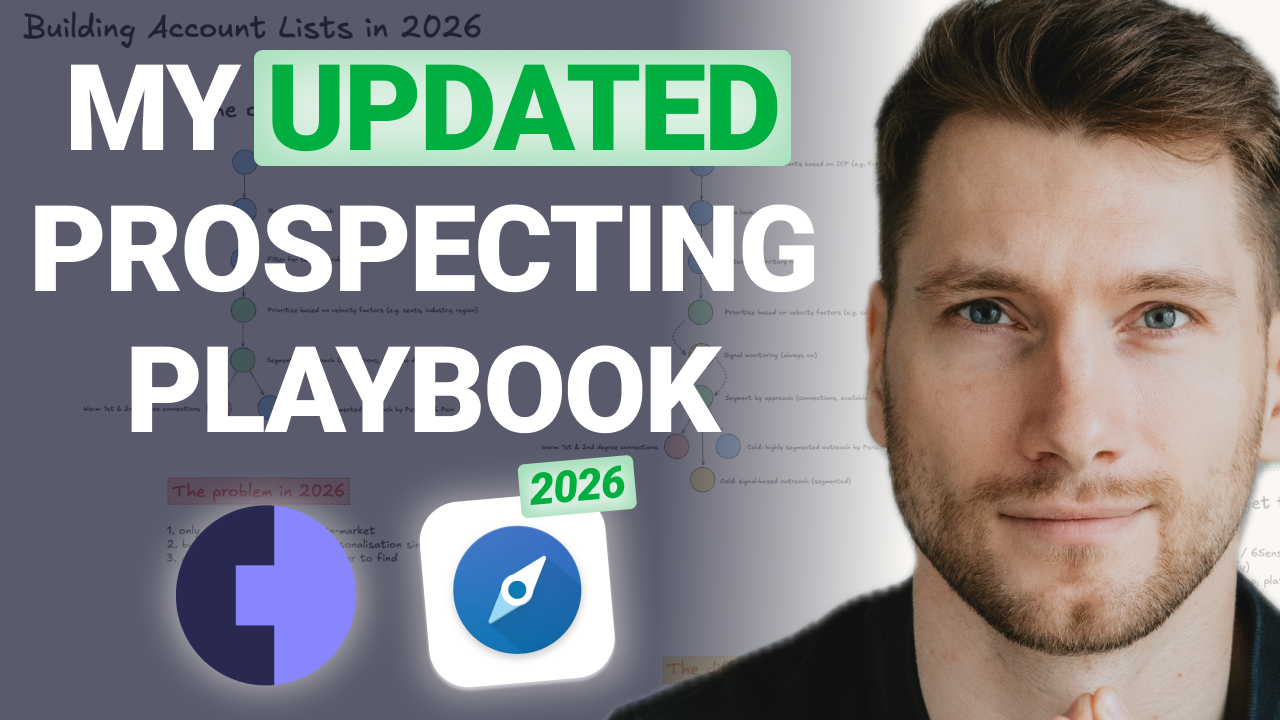
Prospecting Playbook for 2026